


EUDAMED closes the deadline for medical devices already on the market
Europe · Regulation · UDI traceability
On 28 November 2026 the deadline expires for manufacturers to register in EUDAMED, the European medical device database, the devices they were marketing before 28 May and are still selling. It is the second milestone in a calendar that makes the database mandatory in phases.
- 28 May 2026: Four mandatory modules: actors, UDI and devices, notified bodies and market surveillance.
- 28 Nov 2026: Registration of devices that were already on the market and are still being sold.
- 28 May 2027: Registration of certificates issued before the database became mandatory.
What has changed
Commission Decision (EU) 2025/2371, published in the Official Journal on 27 November 2025, declared four of EUDAMED’s six modules fully functional. Since 28 May 2026, a new device must be registered with its UDI before it is sold. The vigilance and clinical investigations modules are still pending; until they are operational, incidents are reported through national channels.
Why it matters to a hospital
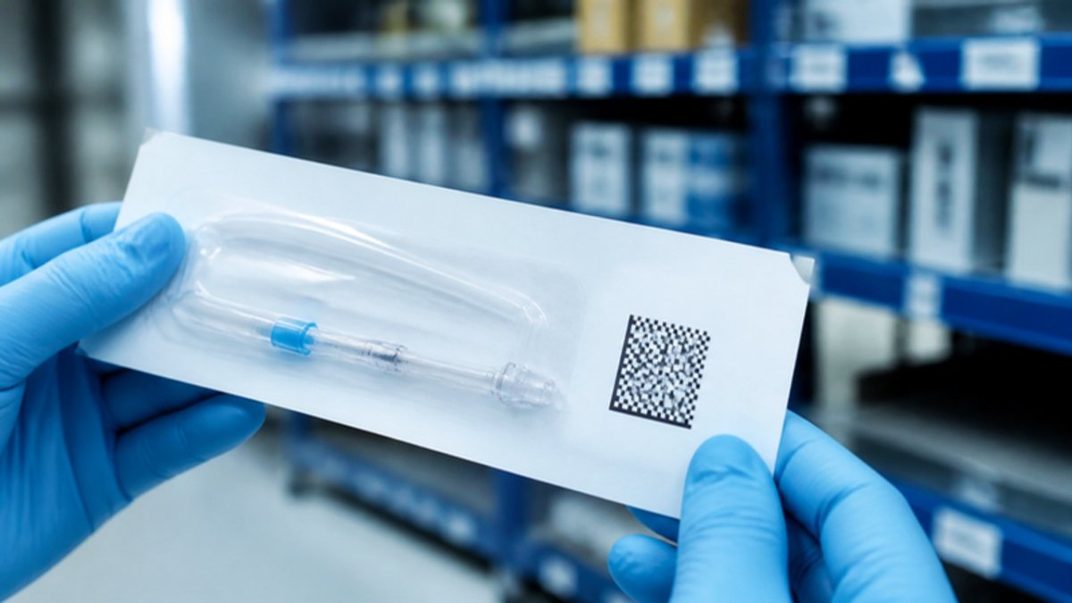
The duty to register lies with the manufacturer, not the hospital. But the outcome does affect hospitals: for the first time there will be a single public source with each product’s data, starting from its UDI. Hospitals, for their part, must keep the UDI of implants: the European Medical Device Regulation (art. 27(9)) requires it for class III devices and, in Spain, Royal Decree 192/2023 (art. 36.6) extends it to classes IIa and IIb. With EUDAMED complete, product data will stop being the obstacle; what remains is recording it at the point of use.
Our take
The bottleneck is no longer the product data but the moment it is used: in the operating room, in a hurry. A hospital whose item master is aligned with the UDI and that records use without adding steps for nursing will comply with the rules without adding work for the team.
More in Insights: UDI traceability
Sources: Commission Decision (EU) 2025/2371 (Official Journal of the EU, 27/11/2025); Pure Global; LearnSignal; TÜV NORD. The secondary sources agree on 28 November; confirm the date in the official text before any regulatory decision.
Gartner expects AI to make manual inventory counting in hospitals pointless
Global · Artificial intelligence · Inventory
On 26 August 2026, Gartner published a forecast aimed at hospital supply chain leaders: counting supplies will be replaced by storerooms that run themselves using artificial intelligence and computer vision.

What it says exactly
Gartner distinguishes between automating and giving autonomy. Barcodes, RFID, smart cabinets and weight-sensing bins make each task faster, but staff remain responsible for counting, scanning and monitoring. For the firm, the real change comes when the storeroom knows what it holds without anyone counting it.
“Hospitals have spent years buying technology that helps employees count supplies, but employees are still doing the counting.”
Bruce Gilmore, VP Analyst at Gartner.
Its practical advice is to measure every investment by the work it removes: whether staff spend less time counting, clinicians find what they need sooner, fewer products expire and there are fewer stock-outs. It also advises not letting past investments dictate strategy, and weighing long-term operating costs and the ability to scale the solution across all inventory locations.

Why it matters to a hospital
It sets the yardstick by which analysts are starting to hold inventory investments to account: the work they remove, not the technology they install.
Our take
We share the yardstick: technology is judged by the nursing hours it gives back, not by the equipment installed. That is why it pays to measure the starting point before changing anything. And one nuance: technology without redesigning the process first only counts faster.
More in Insights: RFID: process first
Source: Gartner press release, 26 August 2026. Content summarised by Synexia; the original belongs to Gartner, Inc.
USD 14 million a year: what a children’s hospital gained by seeing its pharmacy in real time
United States · Hospital pharmacy · RFID
Texas Children’s Hospital uses RFID to track its eligible drugs from the moment they enter the hospital until they are administered. On just two clotting treatments (factors VII and VIII) it saves USD 14 million a year, even though their use was 30% higher than the year before.

The starting point
The hospital spends more than USD 400 million a year on drugs. With inventory managed by hand, it estimated about USD 40 million a year in expired or underused drugs. Misplacing a single specialised treatment can cost between USD 80,000 and USD 1 million.
What changed
- Each eligible drug is tagged on receipt: about 7 seconds per drug.
- RFID cabinets and refrigerators count the inventory continuously; handheld readers are used on open shelving.
- The inventory is linked to billing and administration records, and the pharmacy sees on a dashboard the location, value and expiry of every unit.
- The process went from 12 manual steps to 2: label and RFID tag.

“When you can see exactly what you have and where it is, you stop purchasing just in case.”
Jeff Wagner, Vice President of Pharmacy Operations, Texas Children’s Hospital.
Why it matters to a hospital
These are data from a single hospital, supplied by the hospital itself to a trade publication, and cannot simply be extrapolated. But they show where the money is: in what is bought “just in case” and in what expires.
Our take
The saving does not come from the tag but from no longer buying blind. Very high-cost medicines share that profile: few units, high value and a stock error that costs dearly. That is where a pharmacy gains most by knowing, at every moment, where each unit is.
More in Insights: High-cost medicines
Source: Healthcare IT News. Figures supplied by the hospital to that outlet; Synexia did not take part in the project. Trademarks mentioned belong to their owners.